01 — Comprehensive assessment
Review pain patterns, previous assessments, treatments, function and response to activity.
Focused programs / Pain, Mobility & Recovery
Chronic pain can affect sleep, energy, movement and the activities that matter most. Bring pain history, current care and daily goals into one practical support plan.
Book Initial ConsultationExplore your care journey ↓Understanding persistent pain
Pain can affect more than one part of daily life. Explore the context around your experience and the goals you want to discuss.
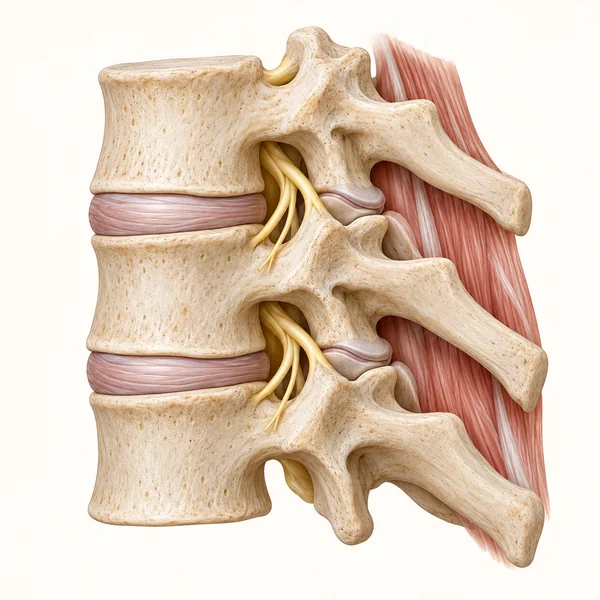
Explore the illustration
Vertebrae provide structure and protection. Discs sit between vertebral bodies, helping cushion and space them.
Muscles help support posture and produce movement. They work with bones, tendons and other tissues.
Joints connect bones. Here, facet joints link neighboring vertebrae at the back of the spine.
Nerves carry signals between the body and the central nervous system. Pain is shaped by how these signals are processed as well as the wider context of a person’s health and life.
The wider pain experience
01 / Pain experience
Pain involves the nervous system and is influenced by a range of biological, psychological and social factors.
How does pain feel, when does it change, and what has already been assessed?
These influences do not make pain imaginary. This illustration cannot identify a diagnosis or measure pain severity.
02 / Sleep & daily life
Persistent pain can affect sleep, energy, mood and participation in daily activities.
Which parts of your day are most affected?
The impact on your life matters alongside the description of pain itself.
03 / Movement & pacing
Discuss function, response to activity and the patterns around flare-ups. Existing assessments and care remain part of the conversation.
Which activities matter to you, and how do symptoms respond to them?
This is not an exercise prescription or a test of what you should be able to do.
04 / Support & goals
Personal goals, coping strategies and support can help shape a practical care discussion.
What would make everyday life more manageable for you?
Progress is considered in the context of your daily life, not a promised pain score.
Review pain patterns, previous assessments, treatments, function and response to activity.
Identify individualized priorities for coping, pacing, lifestyle and daily function.
Track functional goals, flare patterns and response; refine the plan as needed.
The way we care
we focus on cause behind the symptoms and support body natural ability to heal via food, nutrition and lifestyle.
01 / Food
Food choices, eating habits and the routines that shape your day.
02 / Nutrition
Nutritional priorities considered alongside your health history and personal goals.
03 / Lifestyle
Sleep, movement, stress and practical changes that suit your circumstances.
Dr. Patel focuses on understanding the concerns behind your symptoms and tailoring care to your health history, nutrition, lifestyle and goals. Identify individualized priorities for coping, pacing, lifestyle and daily function.
Results and individual responses vary.
Sleep, fatigue, emotional strain and relationships are all useful parts of the conversation. You can start with the effect that matters most to you.
Your pain is real. Talking about coping gives space to its effect on your life and the support you would find useful.
Bring a current medicine and product list, relevant reports you already have, and a few examples of activities pain makes difficult.
Review can focus on the goals you chose, your response to the plan and any changes in symptoms. The pace and need for further discussion depend on your circumstances.
Book an initial consultation with Dr. Shyama Patel to discuss your concerns and next steps.
Secure Online Booking
This selection stays in this browser tab for up to 30 minutes. It has not been sent to the clinic and does not enrol you in a program.
For appointment assistance, Book an Appointment or contact the clinic.